
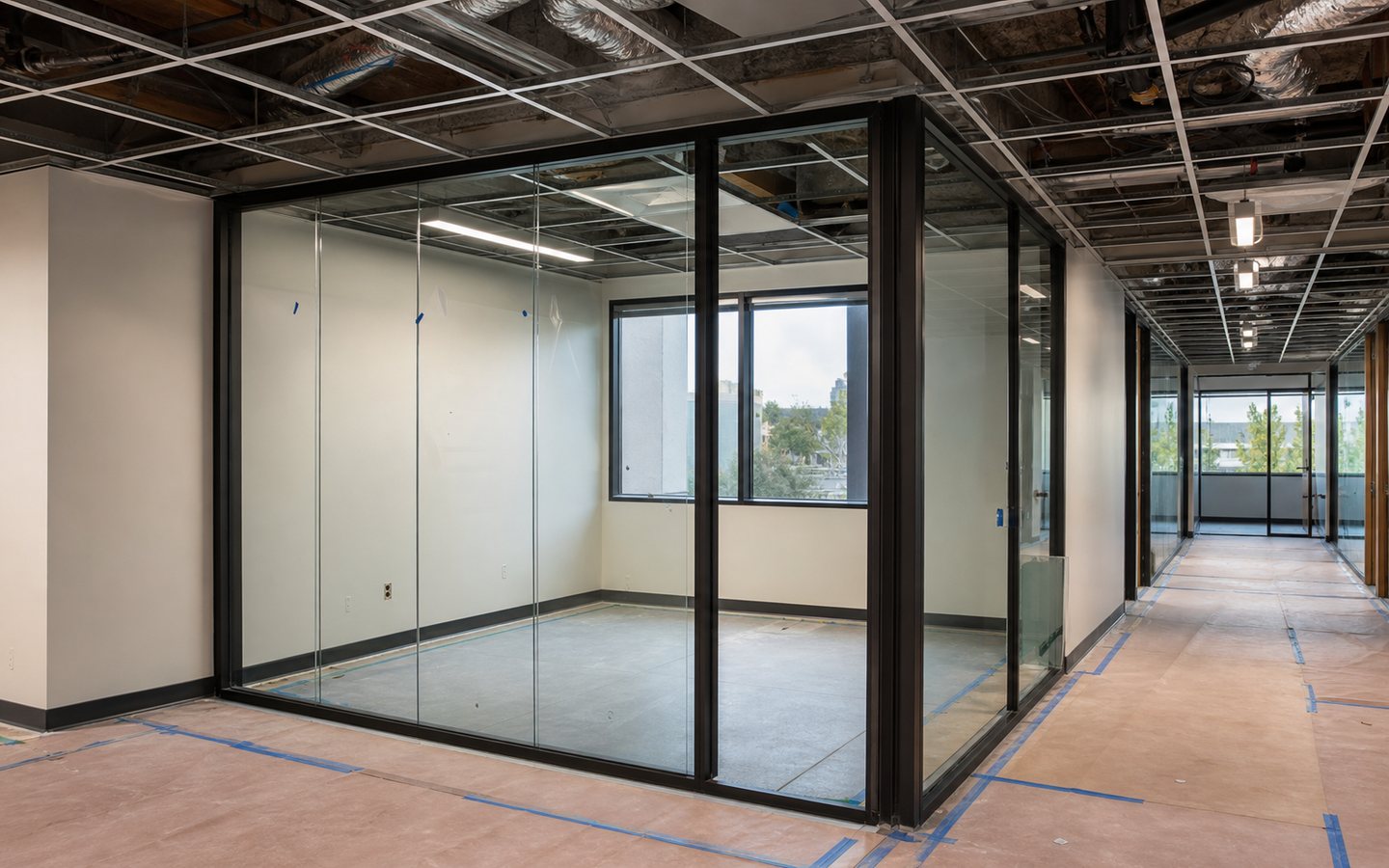
Remodeling Planning
Questions to Ask Before Hiring an Office Remodeling Contractor
Choosing a contractor is not only about whether someone can say yes. For office remodeling contractor, the better test is whether the contractor asks the right questions before the job begins. Use this guide to gather the details that make the first conversation more useful, then talk through the project with Remodeling Veterans.
Office Remodeling Contractor Checklist
Use this office remodeling contractor checklist to compare how each team verifies the contracting entity, defines the workplace program, coordinates landlord and permit inputs, levels a bid, protects occupied operations, and closes the project.
12 Questions in an Office Remodeling Contractor Checklist
Ask every qualified bidder the same questions and record the source document, assumption, responsible party, open decision, and next verification step. An office remodeling contractor checklist is useful when it reveals responsibility boundaries; it should not force unsupported promises about approval, capacity, cost, or timing.
- Is the California license and exact contracting identity current? Ask for the license number and legal entity that would sign the agreement, then compare the current CSLB record’s name, status, classification, personnel, address, bond, workers’ compensation information, and public disclosures. Ask the bidder to explain a mismatch and have the appropriate owner, insurer, landlord, or adviser confirm project-specific contract and insurance requirements.
- How will current and proposed office use be documented? Ask who records the address and suite, current and proposed use, floor area, occupant and visitor assumptions, business operations, hours, existing record information, known violations or open permits, and limits of completed investigation. The owner, project professionals, property team, and authorities determine what applies to the actual space.
- How will the lease, work letter, allowance, and landlord criteria enter the scope? Provide the owner- and adviser-confirmed work letter, building standards, approval contacts, insurance requirements, access rules, delivery windows, shutdown notices, restoration obligations, and turnover criteria. A contractor should reflect confirmed responsibilities in its scope and sequence without interpreting legal rights.
- What workplace program controls the design and pricing? Define headcount assumptions, private and open work areas, meeting and focus rooms, reception, break and wellness spaces, storage, furniture, acoustic and privacy expectations, technology, security, branding, and accessibility needs. Ask how unresolved program decisions are tracked before they become allowances or field changes.
- Who owns design, engineering, and document control? Clarify which architect, engineer, specialty vendor, owner representative, landlord reviewer, or contractor prepares every drawing, calculation, specification, submittal, survey, and field clarification. Ask which dated revision controls the bid and how comments, addenda, requests for information, and authorized changes are logged.
- How will permit, occupancy, exiting, and accessibility questions be coordinated? Ask which authority having jurisdiction is expected for the address, which reviews may be triggered by the proposed use and scope, who submits and responds, and which fees and outside-agency tasks are included. Eligibility, code application, approvals, permits, and inspections remain decisions of the applicable authorities and qualified professionals.
- How will HVAC, electrical, lighting, plumbing, data, and equipment interfaces be evaluated? Ask for a process that connects the workplace program and equipment to existing-condition investigation, load or capacity information, controls, ventilation, power, lighting, receptacles, plumbing, low-voltage, audiovisual, security, and utility inputs. Do not treat an unverified statement that an existing system is adequate as a completed evaluation.
- How will fire and life-safety systems stay coordinated with the layout? Ask who evaluates exits, occupant assumptions, doors, partitions, ceilings, sprinklers, alarms, emergency lighting, signage, and any interfaces with building systems. The office remodeling contractor checklist should identify the responsible professionals, reviewers, documents, and unresolved dependencies rather than promise an outcome.
- What occupied-work and move constraints define the sequence? Document areas that remain in service, work hours, employee and visitor circulation, noise and dust limits, security, sensitive operations, elevator and loading rules, deliveries, shutdowns, temporary barriers, swing space, move events, notices, and restoration. Ask for phase boundaries, assumptions, and decision dates.
- What exact documents and assumptions define the bid? Require each proposal to identify drawing and specification dates, addenda, alternates, quantities, unit prices, exclusions, allowances, owner-furnished items, taxes, permits, bonds, insurance, temporary work, protection, supervision, cleanup, testing, and closeout. An office remodeling contractor checklist cannot make unmatched scopes comparable until material differences are reconciled.
- How will selections, long-lead items, changes, and communication be controlled? Ask for the selection and release log, substitution process, proposal-validity period, change backup, authorization path, schedule-impact documentation, meeting rhythm, decision log, daily or weekly reporting, correction tracking, and escalation path. Avoid relying on an informal promise that every unknown is already included.
- What does office closeout include? Ask about inspections and corrections, punch work, testing or balancing records when applicable, controls and equipment training, keys and access credentials, attic stock, warranties, manuals, record documents, final cleaning, landlord turnover items, and responsibility for later service requests. Separate contractor deliverables from owner, vendor, professional, property, and agency obligations.
Compare Explanations, Documents, and Responsibility Boundaries
A useful office remodeling contractor checklist records the evidence behind each answer and identifies what the contractor cannot decide alone. Resolve material differences in scope and responsibility before relying on a headline total or early schedule.
Keep this page focused on contractor selection. Use the matching service page for service scope, the planning guide for readiness, the cost and timeline guide for budget and schedule drivers, the mistakes guide for preconstruction risks, and the commercial consultation page when the decision team is ready to organize a next step.
Build One Office Decision Brief Before Comparing Bids
Issue one current information package to each qualified bidder. This office remodeling contractor checklist does not eliminate unknowns; it makes them visible so the decision team can compare scope, responsibility, assumptions, and commercial terms.
Use and Workplace Program
Provide the address and suite, current and proposed use, operating hours, headcount and visitor assumptions, room and furniture program, accessibility needs, technology, security, equipment, finishes, and known future flexibility goals.
Property and Existing Conditions
Provide the lease team’s confirmed work letter and landlord criteria, available record drawings, photos and surveys, building-system information, access and delivery rules, known open items, and a clear statement of what has not yet been investigated.
Design and Technical Basis
Issue one dated drawing and specification set with addenda, consultant responsibilities, finish and equipment schedules, alternates, owner-furnished items, and an open-decision log covering permit, accessibility, fire, MEP, technology, utility, and vendor interfaces.
Operations and Commercial Terms
State occupied-work limits, work hours, phases, shutdown rules, temporary conditions, move events, selection deadlines, requested alternates, schedule assumptions, proposal-validity period, change documentation, closeout deliverables, and warranty-administration expectations.
Ask each bidder to return an inclusion, exclusion, allowance, alternate, and clarification schedule. Use the office remodeling contractor checklist to resolve a necessary scope item that one bidder identified and others omitted before deciding whether a price difference reflects value or merely a different basis.
Office Remodeling Contractor Checklist Red Flags
Treat a red flag as a prompt for verification, not automatic proof of misconduct. Slow the decision when an office proposal relies on confidence without an accountable explanation, dated source document, or reviewable supporting detail.
- A low total that cannot be tied to the same drawings, specifications, quantities, alternates, and assumptions used by other bidders.
- An unqualified promise about City eligibility, permit approval, review duration, system capacity, delivery, inspection results, or an occupancy or move date.
- No clear boundary among owner, tenant, landlord, contractor, architect, engineer, furniture or technology vendor, utility, and authority responsibilities.
- Major exclusions, allowances, owner-furnished items, temporary work, occupied-work protection, testing, or closeout hidden in general notes instead of a reviewable schedule.
- Pressure to proceed before license status, contracting identity, controlling documents, authorization, insurance requirements, and the written change process are understood.
- No written answer about communication, correction tracking, record documents, training, property turnover, warranty administration, or post-turnover requests.
Record the answer, source document, responsible party, open decision, and next verification step beside each concern. That turns the office remodeling contractor checklist into a decision record instead of a sales-confidence score.
Official Sources for a Santa Clara Office Remodeling Contractor Checklist
Confirm that the property is inside City of Santa Clara jurisdiction and retrieve the current source for the actual decision date. These links frame verification questions; they do not replace project-specific direction or promise eligibility or approval.
- City of Santa Clara building-permit information: The City says a permit is required before many building alterations and describes electronic application materials, project-dependent documents, and possible other-department approvals.
- City of Santa Clara expedited plan review: The current page describes a limited commercial and tenant-improvement option, including specified professional office occupancies, scope limits, exclusions, and a City eligibility determination.
- CSLB Check a License: Use the current public record to review the contracting entity, status, classification, personnel, bond, workers’ compensation information, and disclosures shown for the actual license.
- CSLB contractor-selection guidance: CSLB recommends checking license status and comparing written bids against the same plans, specifications, and scope. Do not generalize residential-specific rules to a commercial agreement.
Use the office remodeling contractor checklist to ask who owns the current plan set, comments, revisions, permits, inspections, corrections, and closeout. The contractor can explain its coordination process; the applicable authorities, professionals, owner, operator or tenant, landlord, insurer, and advisers retain decisions within their responsibility.
What Usually Shapes Office Remodeling Contractor
These are the practical details that make a office remodeling contractor consultation more productive before construction planning gets serious.
Scope Questions
Ask how the contractor will clarify existing conditions, inclusions, exclusions, finish assumptions, and change triggers.
Communication Questions
Ask how updates, photos, decisions, schedule changes, and punch-list items will be handled during the project.
Local Questions
Ask how city comments, inspections, access, deliveries, HOA, lease, or landlord constraints will be planned.
Conversion Questions
Ask what information helps the contractor decide the next step instead of forcing a vague estimate.
Useful First Details
Before You Request a Consultation
Use this list to make the first contact with Remodeling Veterans more direct. The goal is not to overprepare; it is to send enough signal that the next step is clear.
- What information do you need before giving meaningful scope guidance?
- Which existing conditions could change the project path?
- How are finish selections, material lead times, and owner decisions tracked?
- How do you handle city, HOA, landlord, access, or inspection constraints?
- What should I send before the first serious consultation?
Office Remodeling Contractor Project Signals
Office remodeling for teams that need a better first impression, more useful meeting space, stronger focus areas, and a workplace people can actually function in.
- Reception and lobby updates
- Conference rooms and private offices
- Open office, focus, and collaboration areas
- Flooring, lighting, glass, and finish packages
Conversion Planner
Turn Office Remodeling Contractor Research Into a Clearer Next Step
Use this guide to understand the project details that matter before you request help, so the first conversation feels specific instead of vague.
Clarify the project type, city, property, and reason this work matters now.
Add photos, plans, timing, access notes, and constraint details when available.
Compare whether the scope needs planning, drawings, finish guidance, or a construction conversation.
Use the service page or contact form when the project is ready for a direct next step.
A Clear Planning Path
Use this four-step planning visual to organize the scope, constraints, build sequence, and handoff before a remodeling consultation.
Service and City Pages to Compare
Use these links to move from general research to the service or city page that best matches your property, business space, and location.
Related Office Remodeling Contractor Planning Articles
These related guides help compare planning details, timing questions, budget factors, and contractor-fit questions before you reach out.
Office Remodeling Contractor Questions
Short answers for readers deciding whether this project is ready for a contractor conversation.
What is the most important question before hiring for office remodeling contractor?
Ask how the contractor turns photos, goals, constraints, and finish expectations into a clear next step. Vague answers usually create vague projects.
Should I compare multiple contractors?
Yes. Compare clarity, communication, planning depth, local awareness, and whether each contractor understands the specific project type, not only the headline price.
How does this checklist help the first call?
It helps you send the details that matter most, so Remodeling Veterans can respond with more relevant guidance and less generic back-and-forth.
Can an office tenant improvement use Santa Clara's expedited plan review?
The City currently describes a limited expedited option for eligible commercial tenant-improvement projects, including specified office occupancies, scopes, and conditions. The City makes the eligibility decision after reviewing the actual property and application. Use this office remodeling contractor checklist to identify proposed use, floor, alteration area, occupancy or exiting changes, exterior work, hazards, and other constraints before asking the City which path applies.
What should an office owner or tenant issue before comparing bids?
Issue the same dated drawings, specifications, workplace program, finish and equipment information, landlord criteria, operating constraints, alternates, and open-decision log to each qualified bidder. Ask for a written schedule of inclusions, exclusions, allowances, owner-furnished items, and assumptions so totals can be compared on the same basis.
How can office remodeling disruption be evaluated before construction?
Document occupied areas, work hours, employee and visitor routes, security, noise and dust limits, utility shutdowns, elevator and loading rules, temporary conditions, move sequencing, and notice requirements. Ask the contractor to propose phase boundaries and decision deadlines, while recognizing that the final sequence depends on approved scope, site conditions, property rules, procurement, and trade coordination.
Next Step
Ready to Talk About Office Remodeling Contractor?
Send the city, property type, scope, timing, photos, and any notes you already have. Remodeling Veterans will use those details to identify the practical next step.
- Residential and commercial remodeling conversations.
- Clearer first calls with fewer unknowns.
- Santa Clara base with nearby Silicon Valley service coverage.
- Direct phone support at (408) 618-5555.
Request a Consultation
A few details are enough to start the right conversation.
